

News and events
Innovation for a sustainable future: things we learned from our sustainability event in Ecuador
We met at the Ecuadorian capital of Quito, where it was clear that sustainability is achieved when science, innovation, and human relationships work together.At the Agroplásticos plant employees, strategic partners, customers, associations, and panelists proved with their experiences that we can transform complex challenges into tangible solutions for the region.
Technical innovation that is born out of science and collaboration
The day started with Rodrigo Restrepo, general manager of Plastilene Colombia, who introduced our Paperlike solution. This new material developed by the Group was showcased recently at K Show and PackExpo. Monomaterial films, technical substitutes for difficult to recycle packaging, and structures that are now being sold in the dairy, bakery, and meat industries. What started as a technical idea today is a commercial reality that is working in production lines and meets regulatory requirements, as well as becoming a reference in applied sustainability.
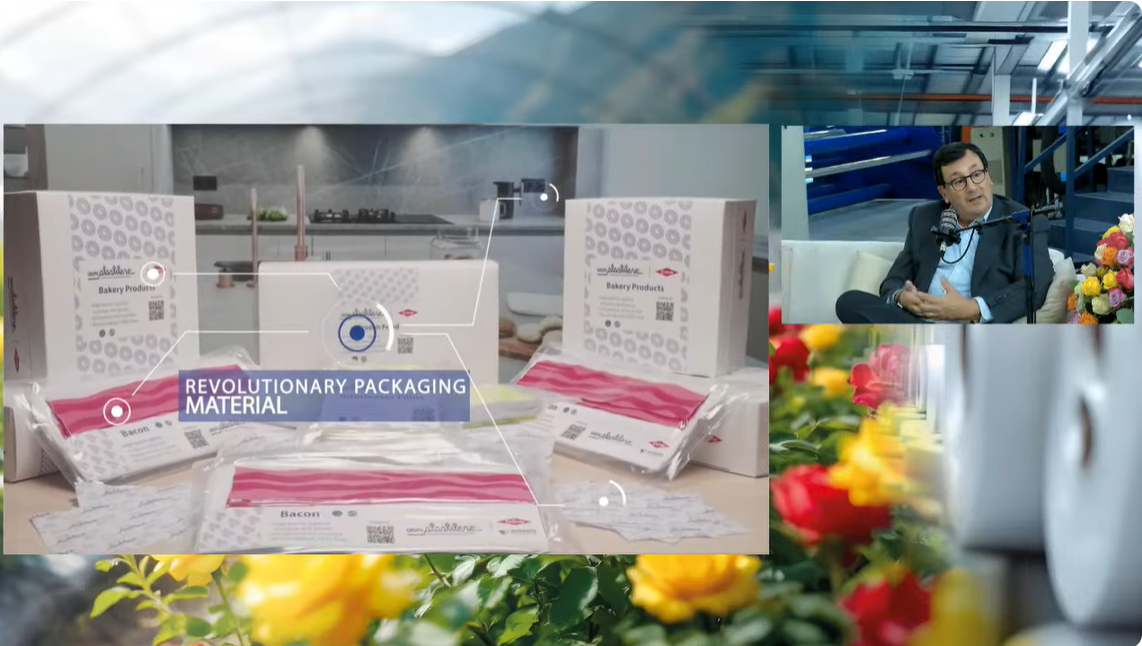
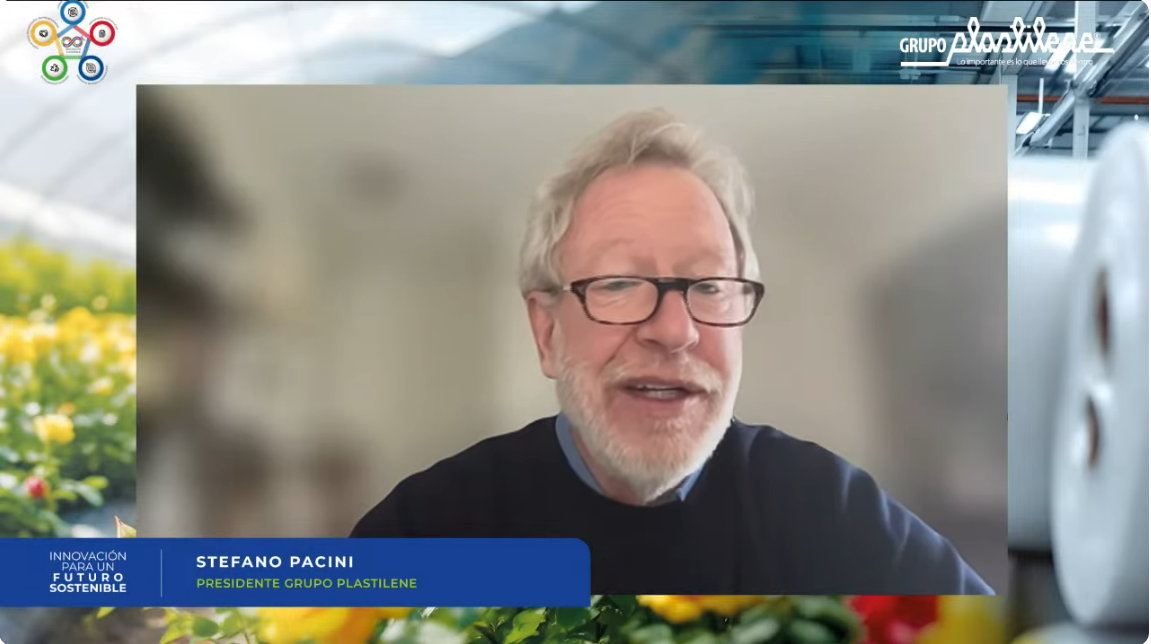
From the United States, Grupo Plastilene’s president, Stefano Pacini, reminisced on why this vision has allowed the organization to open markets in a country as demanding as the United States. His experience made it clear that this strategy was not born out of a need to satisfy a customer, but to assume the role of environmental stewards. Inspired by the birth of his granddaughter, he reflected on the urgent need to prioritize future generations’ wellbeing. His main message was that “innovation is born through a door and ends through another; we have to fail a million times to find a solution. We take on the challenge”.
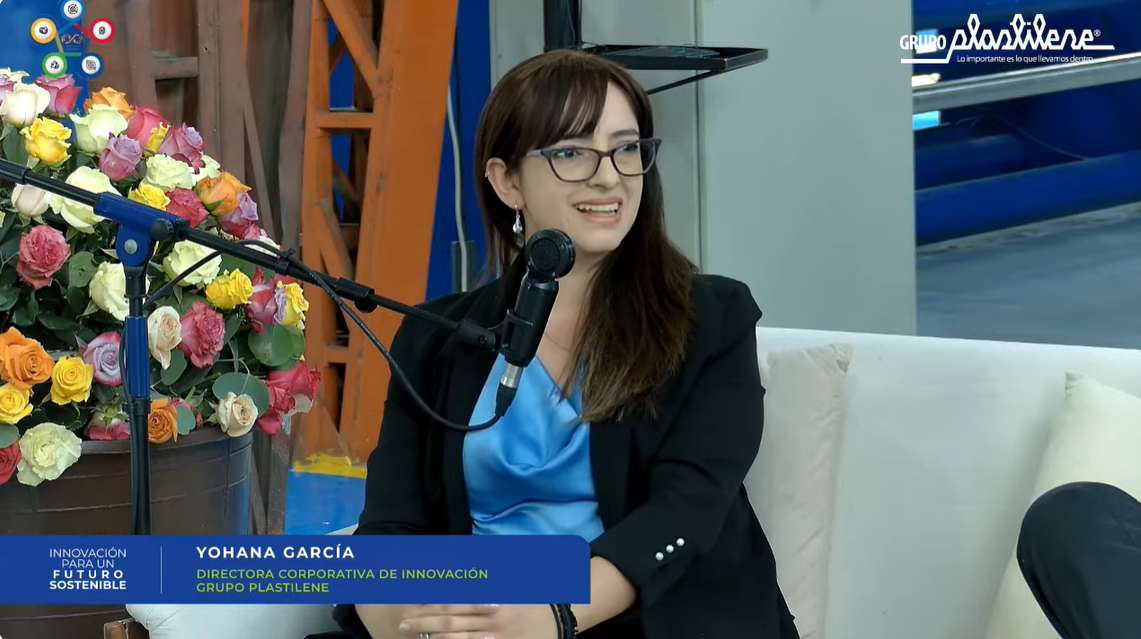
In line with this, our Corporate Innovation Director, Yohana García reinforced how science has become the heart of sustainability at the Group. She spoke about the importance of people’s talent as a way to identify opportunities where others see limitations. Creativity is the spark, but discipline, she highlighted, is what allows an idea to become a product. In order to make it possible, labs are equipped with extrusion lines that replicate industrial processes in a smaller scale, making experimentation possible, failing, adjusting, and moving forward.
Collaborative ecosystems to advance sustainability
The event opened up with an opportunity to share concrete results. Luis Dos Santos, general manager of Agroplásticos shared the impact that the responsible end of life management model that Grupo Plastilene implements in Ecuador has met targets established by the Environmental Department. This achievement was also a way to demonstrate operational discipline, evidence of an authentic commitment to traceability, and responsibility regarding where the materials we put on the market end up.
This vision was complemented with the environmental manager, Emilio Sánchez’s, experience, who as a partner of Grupo Plastilene has been championing formalization within their operations. His company doubled the number of employees, improved their infrastructure, and strengthened its capacity to recover and manage waste. Sustainability in this case was also reflected in improved conditions for employees and an increase in workforce.
The perspective of the flower industry was brought by Alejandro Martínez, Ecuador’s Expoflores President, who reminded us of the association’s target of being carbon neutral in 2028. This target will be achieved even earlier thanks to the responsible end of life management that Agroplásticos has implemented. For a sector that is constantly shifting and requires measured technical solutions, having a partner like Grupo Plastilene that understands agricultural plastic science is key.
This conversation went in depth on the role that associations play and how achievable, realistic, and science based regulations are essential. María Paz Jervis, Ecuadorian Industry and Production President, highlighted that sustainability only works when the entire supply chain is working together. Her comments showed the importance of technical dialogue and the need to create conditions for environmental goals that are attainable.
Álvaro Sampedro shared her experience from the recycling industry, environmental manager in Ecuador, who shared how EPR regulation marked a major shift in his work. The formalization, traceability, and responsible management of waste became an essential standard. This process and work with Grupo Plastilene was decisive: technical support, articulation, and support to make legislation an opportunity and not an obstacle.

To complete the picture, Ricardo Estrada, Purchasing and Sustainability VP of Grupo Plastilene, contextualized the Group’s effort within global regulatory frameworks, especially the Global Plastics Treaty. He explained how the organization has aligned its strategy with key articles related to plastic products, ecodesign, waste management, and a just transition. One of the most convincing examples of this is Reciclene, a plant that today recycles close to 400 tonnes a month of postconsumer flexible plastic in Colombia. Roughly half of this material is reincorporated into packaging produced inside the Group. The rest is used by other industries that are looking for solutions with recycled content and a clear traceability.
This effort is complemented by the work done with EPR legislations in countries such as Colombia and Ecuador, as well as engaging waste pickers and vulnerable communities. The goal is not only to comply with the regulations, but transform them into a leaver to push innovation, new business opportunities, formal employment, and more inclusive values forward.
New materials that are already in the market, responsible end of life models that go beyond the established targets, pioneering postconsumer recycling plants, carbon neutral goals that are ahead of schedules, and transformative partnerships for waste pickers and communities. All of this shows the roadmap ahead of each region to lead sustainable plastic solutions.
The final message of this event is that this project is not only for one company, it is everyone’s project. We can only achieve it by working together to be innovative and take sustainability to the next level.
Relive all of the comments, panels, and technical demonstrations from this official live event. Click on this link to view it.
 Artículos relacionados