

News and events
Circular Economy Forum in Bolivia: learning outcomes for an organized and effective transition
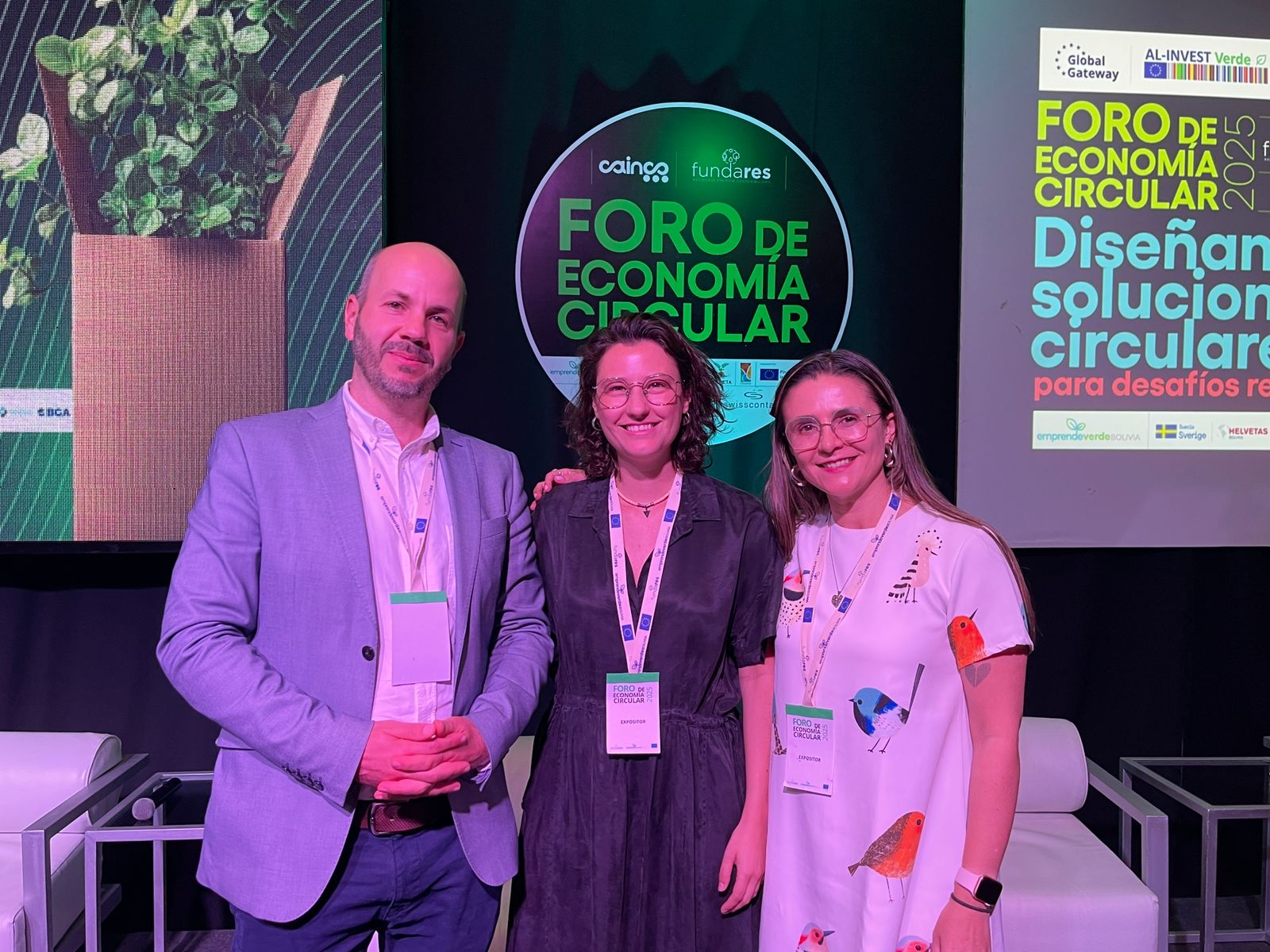
We were invited by Swisscontact, a Swiss cooperation organization, with the support of Acoplásticos, as part of the International Circular Economy Forum in Bolivia. At this event we shared our Colombian experience with the single use plastic legislation and the challenges this brought with regards to the transition into circular models. We wanted to provide practical lessons, promote legislative frameworks that cater to the local context, and prove that circularity is possible when each area assumes responsibility over their role in the economy.
What did we talk about?
We presented three concrete axis
- Who we are and what our strategy is
We went over the scope of Grupo Plastilene and our sustainable innovation strategy framework. In it we put the circular economy in action through things such as managing legislation and being part of organisations, pushing material innovation, prioritizing environmental performance, and working with clients and allies. - The regulatory journey in Colombia
We shared our legislative context of the single use plastic law (2022) and how the late enactment of 100% PCR content requirements proved to be a challenge. This readjustment and mismatch between prohibitions and applicable rules forced us to react quickly and with technical rigor. - Our “Plan B” that allowed us to continue complying
Being able to move forward with the ANLA and other accreditation organizations (such as Icontect and the ICIP) proved to be impossible, so we performed a Life Cycle Assessment for our plastic bags with a third party. This was a science based decision that allowed our customers to maintain their businesses’ continuity, as well as meet measurable environmental criteria while the organizations caught up to the legislation.
A panel that reviewed the entire system
We were also part of a panel moderated by Swisscontact, alongside Ana María Villegas (Xiclo) who leads reuse models to replace single use plastics. This exchange allowed us to dive deeper in three areas:
- The consumer’s role: without habit changes (sortation at the sources, returns, reuse, and informed preference) the best circular design loses traction.
- The government’s role: alongside prohibiting, it must facilitate (create legislations on time, provide accreditation to organizations, enact incentives, and responsible public purchasing mechanisms).
- Competition and formalization: when one is competing with informality there is a significant price difference where companies that invest in compliance and traceability are left at a disadvantage. Public policy must close this gap.
Bolivia today: a starting point and opportunity
.
Bolivia is in an early stage of the creation of their own single use plastics legislative framework. In real life we see little sortation at the source and a large portion of waste ending in landfill. Because of this, the message that Luisa Ribero, our corporate sustainability director, shared was clear: “it’s not about replicating laws, but adapting them to the reality and context of each country: their infrastructure, supply chains, consumer’s culture, and institutional capabilities.”
.
.
Some recommendations:
- Sequence before speed: prohibiting without creating other legislation can create a bottleneck and risk supply chain issues.This transition must be scheduled with verifiable technical routes.
- Aligned incentives: public procurement, tributary benefits for investments, and effective control for informal competencies is a critical aspect.
- Educating the consumer: sortation, return, prioritize reuse, and recycling can lead to change when there are systems in place that make it easy and trustworthy.
What we learned at the forum:
- Regional positioning: sharing our experience makes us get closer to ecosystems that we hadn’t identified in the region and proves Grupo Plastilene’s role as a technical and collaborative actor in Latinamerica.
- Collaboration agenda: we strengthened our relationship with Swisscontact, Acoplásticos, reuse initiatives, and legislators, to promote binational pilots that promote learning
- Validating Grupo Plastilene’s focus: the combination of technological innovation, measurable compliance (LCAs, certified PCR) and institutional dialogue is the road to guarantee that circularity stops being an empty promise, but that it actually becomes part of daily operations.
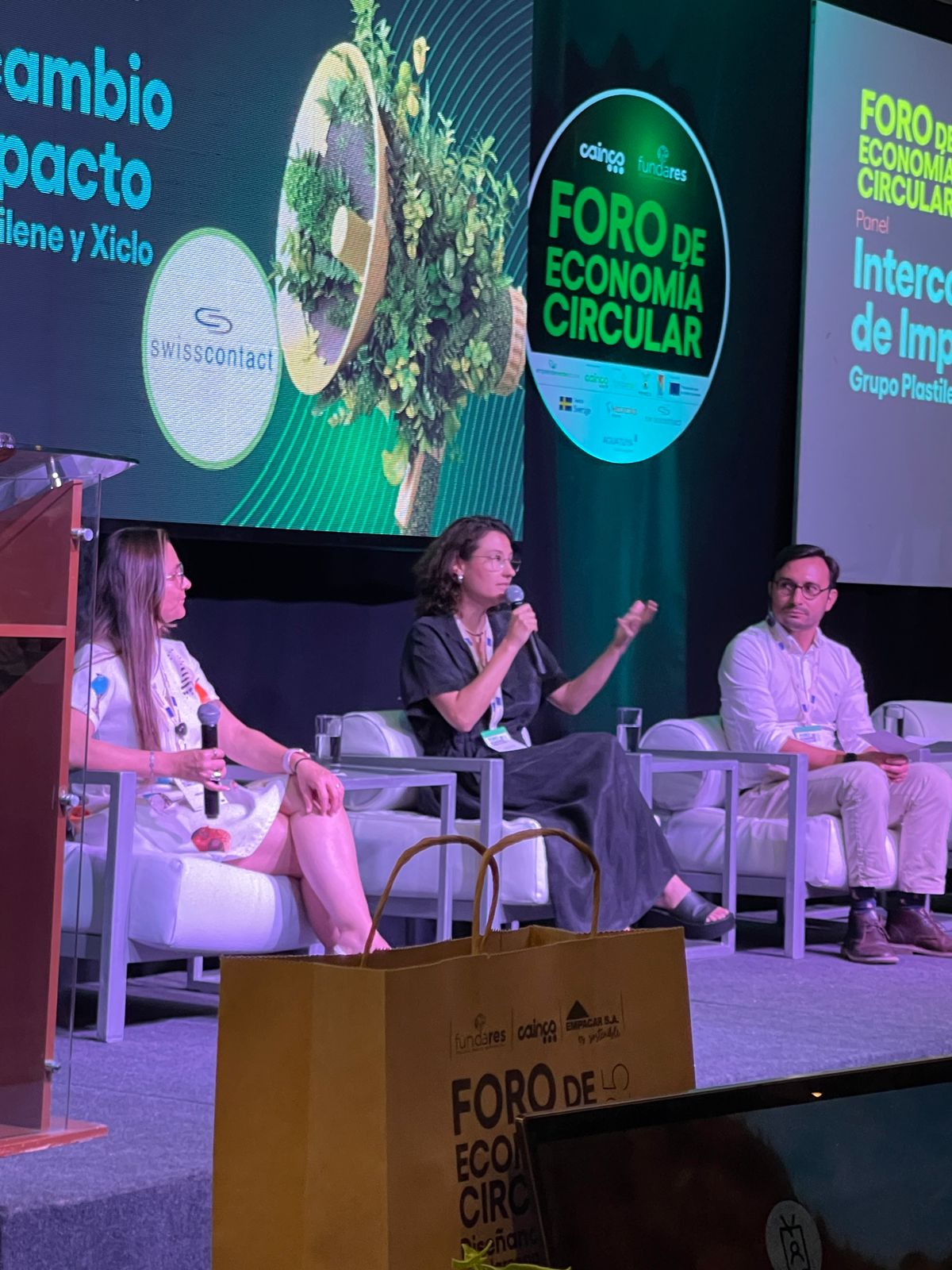
Our experience proves that it is not enough to prohibit. A circular economy relies on clear and on time rulemaking, installed capacity, and an aligned supply chain: producers that invest and redesign, waste managers that can separate at the source, informed companies, consumers that properly separate their waste and return products, and governments that create legislation, provide accreditation, and have control over this. When this happens we are able to maintain supply, improve impacts, and create formal and competitive markets.
We left Bolivia with a conviction that we can speed up this transition if we avoid legislative shortcuts and prioritize realistic sequencing that is based on data. From Grupo Plastilene we will continue to support with knowledge, piloting solutions for our customers and partners, and promoting a framework that makes this cycle a measurable, traceable and transparent reality.
Would you like to know more? Here is another resource that might interest you:
La economía circular avanza, pero en Bolivia requiere normas y una ruta compartida
 Artículos relacionados